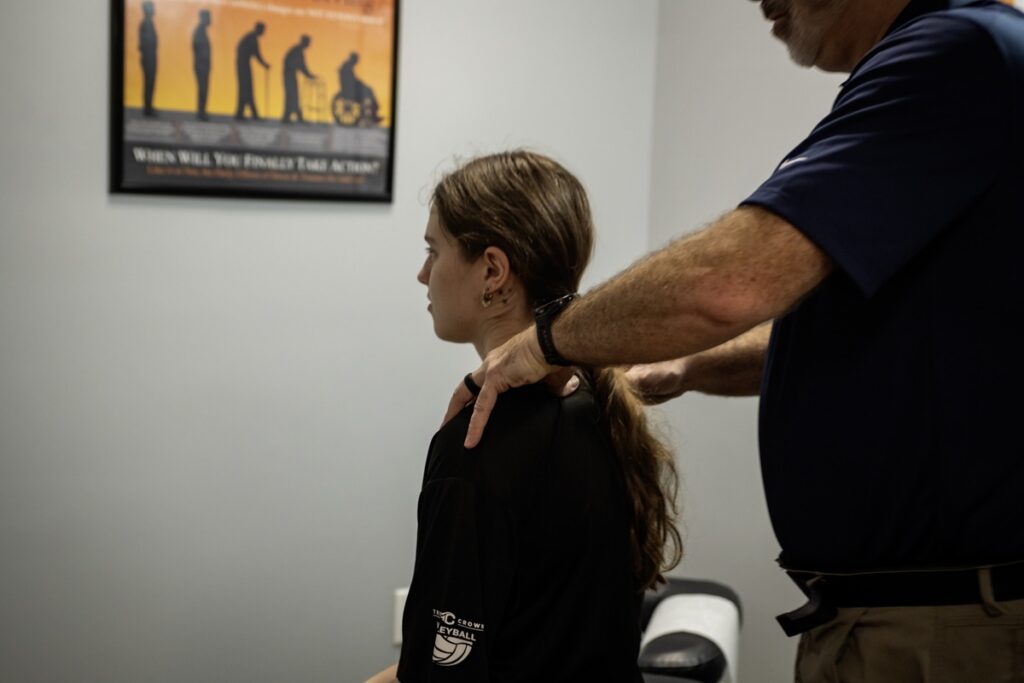


Neck pain is one of the most common reasons people seek chiropractic care, and it’s easy to understand why. Whether it comes from long hours at a desk, sleeping in an awkward position, an old injury, or simply the stress of daily life, neck pain can disrupt just about everything — your sleep, your focus, your mood, and your ability to move freely. If you’ve been dealing with stiffness, aching, or sharp discomfort in your neck, you’re far from alone. Here in Nashville, TN, many patients come through the doors at Dohnal Chiropractic looking for answers and relief. This article will walk you through the most common chiropractic techniques for neck pain, what the treatment process actually looks like, and what you can realistically expect along the way.
What Is Chiropractic Care for Neck Pain?
Chiropractic care for neck pain is a non-invasive, drug-free approach to evaluating and treating dysfunction in the cervical spine (the neck region). Through hands-on adjustments, soft tissue techniques, and supportive therapies, a chiropractor works to restore proper alignment, reduce nerve irritation, and improve mobility in the neck and surrounding structures.
Understanding Neck Pain and the Cervical Spine
Your cervical spine is a remarkable structure. It consists of seven vertebrae that support the full weight of your head — roughly 10 to 12 pounds — while allowing an impressive range of motion in multiple directions. This combination of mobility and load-bearing responsibility makes the neck particularly vulnerable to strain, misalignment, and injury.
Neck pain can originate from a number of sources. Muscle tension and spasm are among the most common culprits, often triggered by poor posture, prolonged sitting, or stress. Cervical joint dysfunction — when the small joints between vertebrae become stiff or irritated — is another frequent cause. Herniated or bulging discs, nerve compression, and ligament strain can also produce significant neck discomfort, sometimes radiating pain down into the shoulders, arms, or hands.
Here in Nashville, the demands of modern work and life play a significant role. Many of our patients at Dohnal Chiropractic spend long hours at computers, commuting, or looking down at phones. These habits gradually shift the natural curve of the cervical spine, placing excess stress on the joints and soft tissues over time. The good news is that most neck pain responds well to conservative care — and that’s exactly where chiropractic shines.
Common Chiropractic Techniques for Neck Pain
One of the most important things to understand is that chiropractic care is not one-size-fits-all. Dr. Christopher Dohnal tailors each treatment plan to the individual patient based on their specific diagnosis, health history, and goals. That said, there are several well-established techniques commonly used for neck pain that are worth knowing about before your first visit.
Cervical Spinal Manipulation (The “Adjustment”)
This is arguably the most recognized chiropractic technique. A cervical adjustment involves the chiropractor applying a precise, controlled force to a specific vertebral joint in the neck. The goal is to restore normal motion, reduce joint stiffness, and relieve irritation to the surrounding nerves and muscles. You may hear a gentle “pop” during this procedure — that sound is simply gas being released from the joint space, and it’s completely normal. Evidence from organizations like the American Chiropractic Association and research published in conservative care literature indicates that spinal manipulation can be an effective option for managing cervical pain in appropriate patients.
Cervical Mobilization
For patients who prefer a gentler approach — or for whom high-velocity manipulation is not recommended — cervical mobilization is an excellent alternative. This technique involves slow, rhythmic movements applied to the cervical joints to gradually increase their range of motion and reduce stiffness. There’s no audible pop with mobilization, and many patients find it deeply relaxing. Dr. Christopher Dohnal uses this approach frequently with patients who are new to chiropractic care or those who are in an acute phase of pain.
Soft Tissue Therapy
Tight, overworked muscles in the neck and upper back can perpetuate pain and limit recovery. Soft tissue techniques — which may include myofascial release, trigger point therapy, or instrument-assisted soft tissue mobilization — target the muscles, fascia, and tendons surrounding the cervical spine. These approaches help reduce muscle guarding, improve circulation, and allow the joints to respond better to adjustments.
Flexion-Distraction Technique
If disc-related issues are contributing to your neck pain, a technique called flexion-distraction may be incorporated into your care. This gentle, low-force method uses a specialized table to decompress the spinal discs and reduce pressure on affected nerves. It’s a particularly helpful approach for patients experiencing radiating pain into the arm (a condition sometimes called cervical radiculopathy).
Therapeutic Exercises and Rehabilitation
Chiropractic care doesn’t begin and end on the treatment table. A comprehensive care plan for neck pain typically includes guidance on therapeutic exercises designed to strengthen the deep cervical muscles, improve postural stability, and prevent future episodes. At Dohnal Chiropractic, patients often receive home exercise recommendations tailored to their specific condition and fitness level.
What to Expect During Your First Visit
If you’ve never been to a chiropractor before, it’s completely natural to feel a little uncertain about what will happen. The first visit at Dohnal Chiropractic in Nashville is focused entirely on understanding your situation — not rushing into treatment.
Dr. Christopher Dohnal will begin with a thorough health history review, asking about when your neck pain started, what makes it better or worse, any previous injuries, and your overall health. This is followed by a physical and orthopedic examination that assesses your posture, range of motion, muscle strength, and neurological reflexes. Imaging like X-rays may be recommended if clinically appropriate, as they can reveal important information about the structure of your cervical spine.
From there, a personalized care plan is developed. You’ll have the opportunity to ask questions, understand your diagnosis, and learn what treatment will look like before anything begins. Informed, collaborative care is a cornerstone of the Dohnal Chiropractic approach. Many patients are pleasantly surprised by how thorough and unhurried that first appointment feels.
To get a better sense of what chiropractic neck treatment looks like in practice, take a few minutes to watch this helpful overview:
How Chiropractic Care Addresses the Root Cause
One of the core philosophies behind chiropractic care is addressing the underlying cause of pain rather than simply managing symptoms. This matters because neck pain that stems from a misaligned joint, poor posture, or muscular imbalance won’t resolve on its own if the root issue is never corrected. Pain relievers may dull the discomfort temporarily, but they don’t restore movement or address joint dysfunction.
Chiropractic adjustments work by improving the mechanics of the cervical spine. When vertebral joints move properly, they place less strain on the surrounding muscles and nerves. Improved joint mobility also supports better proprioception — your body’s ability to sense its own position in space — which is important for postural awareness and long-term spinal health. Research published through the National Center for Complementary and Integrative Health (NCCIH) suggests that spinal manipulation is a reasonable option for many patients with acute and chronic neck pain, particularly as part of a broader, conservative care plan.
At Dohnal Chiropractic, the approach goes beyond the adjustment itself. Dr. Christopher Dohnal works to educate patients about the postural habits, movement patterns, and lifestyle factors that may be contributing to their pain — because lasting relief requires more than just in-office treatment.
Practical Tips to Support Your Recovery
What you do between appointments matters just as much as what happens during them. Here are some straightforward ways to support your neck health while undergoing chiropractic care:
Evaluate your workstation setup. If you work at a desk, your monitor should be at eye level so you’re not constantly looking down or straining upward. Your chair should support your lower back, and your keyboard should allow your elbows to rest comfortably at roughly a 90-degree angle. Small ergonomic adjustments can dramatically reduce the cumulative strain on your cervical spine over a workday.
Be mindful of your phone habits. Looking down at a screen for extended periods — sometimes called “tech neck” — places a significant mechanical load on the neck. Try raising your phone to eye level and taking breaks from screen use regularly throughout the day.
Pay attention to your sleep position. Sleeping on your stomach forces your neck into prolonged rotation, which can aggravate cervical pain. Side or back sleeping with a supportive pillow that maintains the natural curve of your neck tends to be more spine-friendly. Dr. Christopher Dohnal can provide personalized guidance based on your specific condition.
Stay gently active. Rest is sometimes necessary during a flare-up, but prolonged inactivity often makes neck pain worse. Gentle walking, light stretching, and the exercises recommended during your chiropractic visits help maintain circulation and prevent the muscles from tightening further.
Manage stress intentionally. Many patients in the Nashville area underestimate how much stress contributes to neck and shoulder tension. Even simple practices like deep breathing, short walks, or adequate sleep can meaningfully reduce the physical burden of stress on the neck muscles.
When to See a Chiropractor for Neck Pain

Mild, short-lived neck stiffness often resolves on its own within a day or two. However, there are several signs that suggest it’s time to get a professional evaluation. If your neck pain has persisted for more than a week, is interfering with your sleep or daily activities, or is getting progressively worse rather than better, a chiropractic assessment is a reasonable and prudent step.
Pain that radiates down into your shoulder, arm, or hand — or that is accompanied by numbness, tingling, or weakness — may indicate nerve involvement and warrants prompt evaluation. Headaches that seem to originate from the base of the skull or upper neck (cervicogenic headaches) are another common presentation that chiropractic care has been shown to help address.
It’s also important to be aware of red flags that require immediate medical attention rather than chiropractic care. These include neck pain following a significant traumatic event, pain accompanied by difficulty walking or coordinating movements, unexplained fever, or severe pain that begins suddenly without a clear cause. In any of these cases, Dr. Christopher Dohnal would refer patients to the appropriate medical provider — your overall wellbeing always takes priority.
Chiropractic Techniques for Neck Pain: A Comparison
Technique | How It Works | Best Suited For | Sensation During Treatment |
|---|---|---|---|
Cervical Spinal Manipulation | Precise, controlled thrust to restore joint motion | Joint stiffness, acute/chronic neck pain | Quick movement, may hear a “pop” |
Cervical Mobilization | Slow, gentle rhythmic joint movement | Sensitive patients, acute pain, first-time patients | Gentle, often relaxing, no audible pop |
Soft Tissue Therapy | Targets muscles, fascia, and trigger points | Muscle tension, spasm, myofascial pain | Pressure, mild tenderness in tight areas |
Flexion-Distraction | Decompresses cervical discs with a specialized table | Disc herniations, nerve compression, radiculopathy | Gentle rhythmic motion, generally painless |
Therapeutic Exercise | Strengthens stabilizing muscles, improves posture | Long-term recovery, prevention, postural correction | Mild exertion, performed at home or in-office |
Myths vs. Facts About Chiropractic Neck Treatment
Myth: Chiropractic neck adjustments are dangerous.
Fact: Serious adverse events from cervical chiropractic care are very rare when performed by a licensed, trained chiropractor on appropriate patients. A thorough intake and examination — like the one Dr. Christopher Dohnal conducts at Dohnal Chiropractic — helps identify any contraindications before treatment begins. Most patients experience mild, temporary soreness at most, similar to how you might feel after a new workout.
Myth: You’ll hear a loud “crack” and it will be painful.
Fact: The audible sound sometimes associated with chiropractic adjustments is simply the release of gas from within the joint — it’s the same mechanism as when you crack your knuckles. It is not the sound of bones cracking or grinding, and it is not inherently painful. Many patients also receive techniques that produce no sound at all, such as mobilization or soft tissue work.
Myth: Once you start chiropractic care, you have to go forever.
Fact: Chiropractic care plans are tailored to the patient’s specific needs and goals. Some patients need a short course of treatment to resolve an acute issue. Others choose to continue with periodic wellness visits once their pain has resolved — but that is always a personal choice, never a requirement. At Dohnal Chiropractic, transparency about care expectations is a priority.
Myth: Chiropractic only helps with back pain, not neck pain.
Fact: Chiropractic care has a well-established role in managing cervical spine conditions. Evidence from organizations like the American College of Physicians (ACP) includes spinal manipulation as a recommended option for non-pharmacologic management of neck pain, alongside other conservative approaches.
Myth: Neck pain always requires imaging before treatment can begin.
Fact: Many cases of neck pain can be evaluated and safely treated based on a thorough clinical examination alone. Imaging is recommended when specific clinical findings suggest it’s necessary — such as following trauma, with neurological symptoms, or when the cause is unclear. Not every neck pain patient needs an X-ray before treatment begins.
Final Thoughts from Dohnal Chiropractic
Living with neck pain doesn’t have to be your normal. Whether you’re dealing with a nagging stiffness that’s been building for months or a more acute episode that’s caught you off guard, chiropractic care offers a thoughtful, personalized path toward feeling better — without relying on medication or invasive procedures.
Here at Dohnal Chiropractic in Nashville, TN, Dr. Christopher Dohnal brings a thorough, patient-centered approach to every visit. The goal isn’t just to get you out of pain — it’s to help you understand what’s happening in your body, equip you with tools to maintain your progress, and support your long-term spinal health. Nashville deserves accessible, honest, and effective chiropractic care, and that’s exactly what this practice is built around.
If you’ve been putting off getting your neck checked, consider this your nudge. The sooner underlying issues are addressed, the more options you typically have — and the easier recovery tends to be. The team at Dohnal Chiropractic is here to help you take that first step with confidence.
Frequently Asked Questions
Is chiropractic care safe for neck pain?
For most people, chiropractic care for neck pain is considered safe when provided by a licensed and trained chiropractor. A proper examination is always performed first to rule out any conditions that would make certain techniques inadvisable. Mild, temporary soreness after an adjustment is normal and typically short-lived.
How many chiropractic sessions will I need for neck pain?
The number of visits varies significantly depending on the nature and duration of your neck pain, your overall health, and how your body responds to care. Some patients notice meaningful improvement within just a few visits, while others with more complex or chronic conditions may benefit from a longer course of treatment. Dr. Christopher Dohnal will provide a care plan estimate after your initial evaluation.
Will I feel sore after a neck adjustment?
Some patients experience mild soreness or achiness in the treated area for 24 to 48 hours after their first few adjustments — similar to the feeling after a new exercise routine. This is a normal response as your body adapts. Applying ice to the area and staying hydrated can help ease any temporary discomfort.
Can chiropractic help with headaches caused by neck problems?
Yes. Cervicogenic headaches — those that originate from dysfunction in the cervical spine — are a recognized condition that chiropractic care is well-suited to address. Evidence suggests that spinal manipulation and soft tissue therapy can reduce the frequency and intensity of headaches that have a cervical origin.
What’s the difference between a cervical adjustment and cervical mobilization?
A cervical adjustment involves a quick, precise thrust to a specific joint to restore its movement, and may produce an audible pop. Cervical mobilization uses slower, gentler movements to gradually improve joint motion without the thrust or the sound. Both are effective techniques, and the right choice depends on the patient’s condition, comfort level, and clinical presentation.
Can I see a chiropractor in Nashville if I’ve had neck surgery?
Patients with a history of neck surgery can often still benefit from chiropractic care, though the specific techniques used will be adapted to account for the surgical history. It’s important to disclose any prior surgeries during your intake at Dohnal Chiropractic so that Dr. Christopher Dohnal can design a safe and appropriate care plan for your unique situation.
TL;DR Summary
Chiropractic care for neck pain uses non-invasive techniques like spinal adjustments, mobilization, soft tissue therapy, and therapeutic exercise to restore movement and reduce pain.
Dr. Christopher Dohnal at Dohnal Chiropractic in Nashville, TN tailors each care plan to the individual patient based on a thorough examination and health history.
Your first chiropractic visit focuses on diagnosis and education before any treatment begins — it’s a collaborative, patient-centered process.
Most neck pain responds well to conservative chiropractic care, especially when addressed early and combined with supportive habits like good ergonomics and regular movement.
Red flags like neck pain after trauma, neurological symptoms, or sudden severe pain should be evaluated medically right away — a good chiropractor will always refer you when appropriate.