

If your hands have been tingling, going numb, or waking you up in the middle of the night with that burning, aching discomfort, you already know how frustrating carpal tunnel syndrome can be. It makes everyday tasks harder — typing, gripping a steering wheel, even holding a cup of coffee. What many people in Nashville don’t realize is that chiropractic care can play a meaningful role in addressing carpal tunnel symptoms without jumping straight to surgery or relying solely on pain medication. At Dohnal Chiropractic, Dr. Christopher Dohnal works with patients dealing with exactly this kind of pain, and the results can be genuinely encouraging.
What is carpal tunnel syndrome? Carpal tunnel syndrome (CTS) is a condition where the median nerve — which runs from your forearm through a narrow passageway in your wrist called the carpal tunnel — becomes compressed or irritated. This compression leads to numbness, tingling, weakness, and pain in the hand and wrist, often extending up into the forearm.
What Causes Carpal Tunnel Syndrome?
Carpal tunnel syndrome doesn’t usually appear out of nowhere. It tends to develop gradually over time, often as a result of repetitive hand and wrist movements, poor posture, or prolonged pressure on the wrist. Here in Nashville, TN, many of the patients Dr. Christopher Dohnal sees work desk jobs that involve hours of typing — and that repetitive stress adds up over weeks and months.
The carpal tunnel itself is a narrow channel made up of bones and ligaments at the base of your hand. When the tissues surrounding the median nerve swell or thicken — whether from repetitive use, inflammation, or structural changes — that nerve gets squeezed. Less space in the tunnel means more pressure on the nerve, and more pressure means more symptoms.
Several factors can contribute to the development of carpal tunnel syndrome. Repetitive hand motions are a major one, but there are others worth understanding. Wrist injuries or fractures can narrow the carpal tunnel. Certain health conditions like diabetes, thyroid disorders, and rheumatoid arthritis are also associated with a higher risk. Pregnancy-related fluid retention is another known contributor. And importantly, poor spinal alignment — particularly in the neck and upper spine — can affect how the nerves that travel down the arm are functioning, which is something chiropractic care is uniquely positioned to address.

Symptoms to Watch For
Not every case of carpal tunnel feels the same, but there are some common warning signs that show up again and again. The most frequently reported symptom is a tingling or “pins and needles” sensation in the thumb, index, middle, and part of the ring finger. Many patients describe it as similar to the feeling you get when your hand falls asleep — except it keeps happening, often without an obvious cause.
Nighttime symptoms are especially common. Many people find that their hands go numb or start aching in the early morning hours, often waking them from sleep. This happens because people tend to sleep with their wrists bent, which further compresses the carpal tunnel. Shaking or flexing the hands can temporarily relieve the sensation, but that’s only a short-term fix.
As the condition progresses, symptoms can include weakness in the hand — particularly difficulty gripping objects or pinching small things. Some people notice they’re dropping items more than usual, or that fine motor tasks like buttoning a shirt feel harder than they used to. Left unaddressed, these symptoms can become persistent and interfere with your quality of life in a serious way.
Why Chiropractic Care Makes Sense for Carpal Tunnel
One of the most important things to understand about carpal tunnel syndrome is that it is a nerve compression issue — and the median nerve doesn’t originate in the wrist. It originates in the cervical spine (the neck) and travels all the way down through the shoulder, elbow, forearm, and wrist before reaching the hand. That means the health of your entire upper kinetic chain matters when it comes to carpal tunnel symptoms.
Chiropractic care takes a whole-body approach that conventional treatment sometimes misses. Research suggests that conservative, non-invasive care — including spinal and wrist manipulation — can help reduce the nerve irritation associated with carpal tunnel symptoms. The National Center for Complementary and Integrative Health (NCCIH) acknowledges manipulation-based therapies as part of the landscape of conservative care options for musculoskeletal conditions. The evidence for chiropractic care in managing carpal tunnel and related upper extremity nerve issues is not definitive, but it is genuinely promising and continues to grow.
When the vertebrae in your neck are misaligned or restricted in movement, they can place additional tension on the nerves that supply your arm and hand. This is sometimes referred to as a “double crush” phenomenon — where the nerve is being irritated at more than one point along its path. Addressing spinal alignment alongside the wrist itself gives patients a more complete approach to recovery. That’s exactly what Dr. Christopher Dohnal focuses on at Dohnal Chiropractic — looking at the full picture rather than just the site of pain.
What Chiropractic Care Looks Like at Dohnal Chiropractic
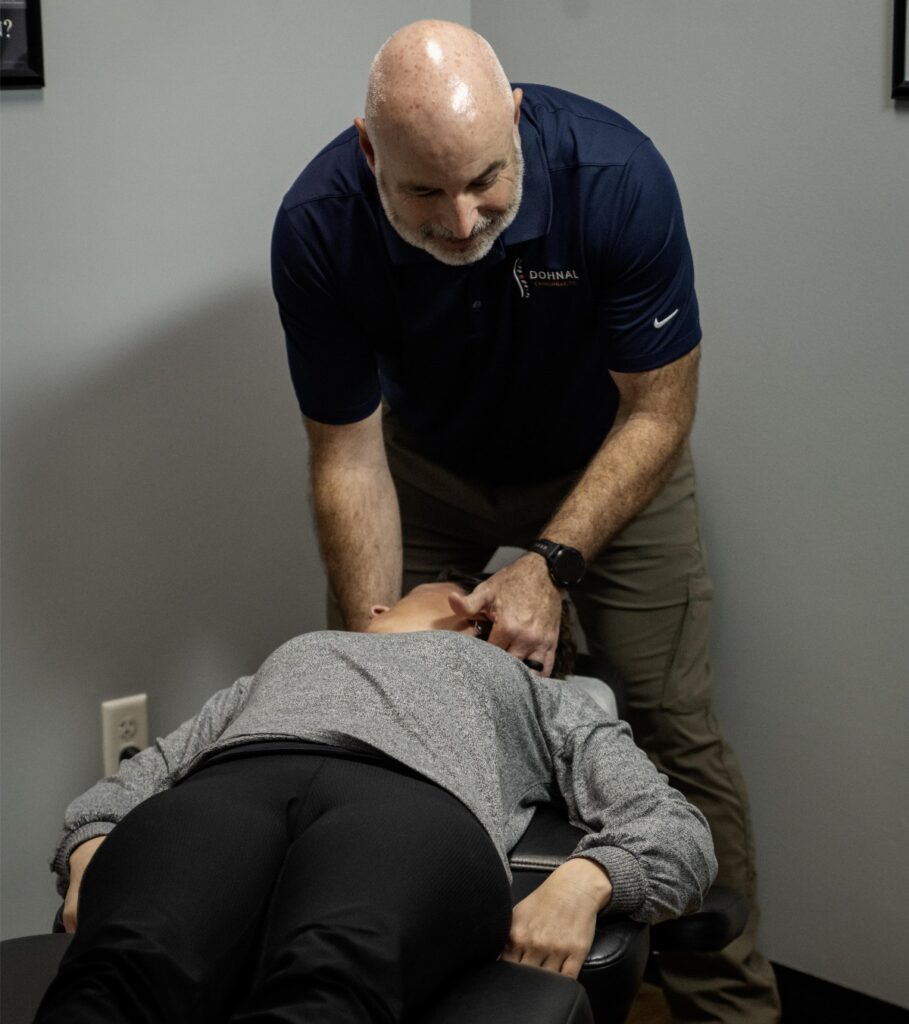
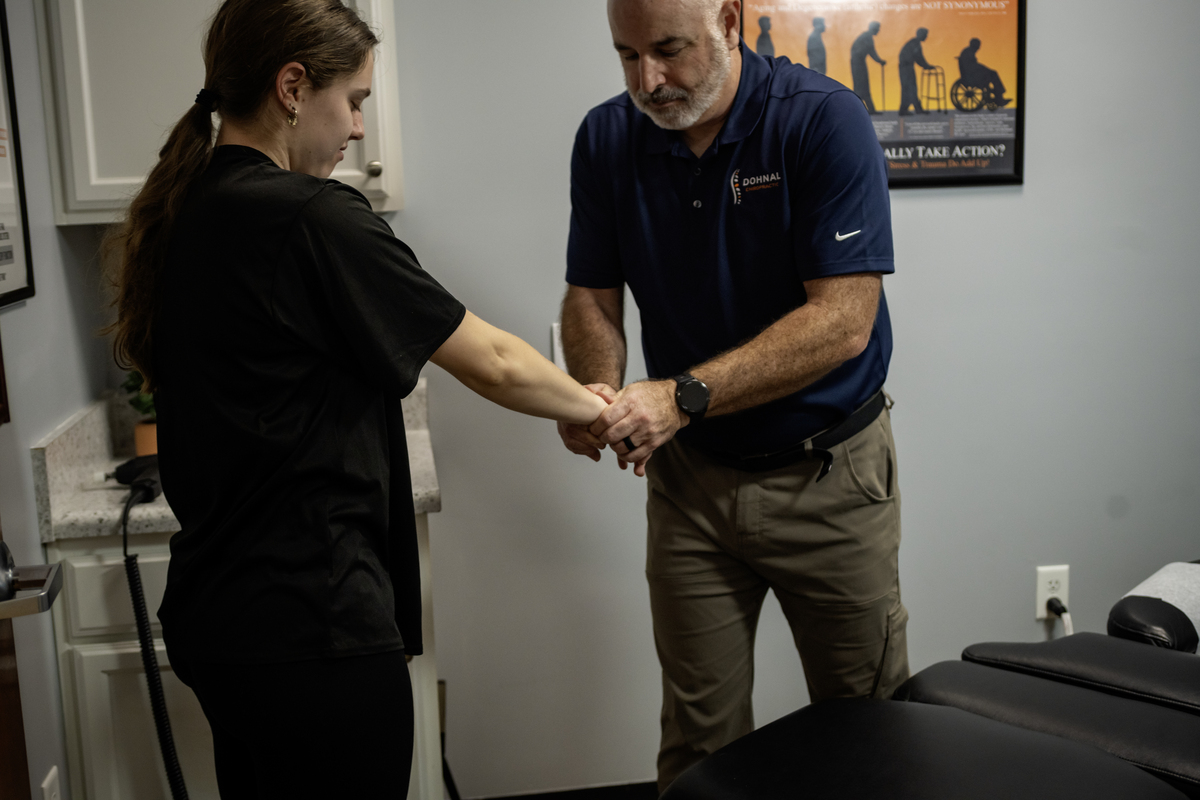
If you come into Dohnal Chiropractic in Nashville with carpal tunnel symptoms, Dr. Christopher Dohnal will start with a thorough evaluation. That typically includes a detailed health history, an assessment of your posture and spinal alignment, and an examination of the wrist and hand. The goal is to understand where the nerve irritation is coming from — whether that’s the wrist, the elbow, the shoulder, the neck, or some combination of all of them.
Based on that evaluation, care may involve gentle chiropractic adjustments to the cervical spine or thoracic spine to reduce nerve tension from the top down. Adjustments to the wrist and elbow joints may also be part of the plan, helping to restore proper joint movement and reduce localized compression. Soft tissue work to address tightness in the forearm muscles is another commonly used approach. Exercises and stretches to support nerve mobility and strengthen the surrounding muscles are often incorporated as well.
Dr. Christopher Dohnal understands that every patient’s situation is different. Someone dealing with early-stage tingling after starting a new desk job is going to have a very different care plan than someone who’s been experiencing weakness and numbness for years. That individualized approach is one of the core strengths of chiropractic care — it isn’t one-size-fits-all.
Practical Tips to Support Your Recovery
Whether you’re already working with a chiropractor or just exploring your options, there are some practical things you can do every day to support healthier wrists and nerves. These habits won’t replace professional care, but they can make a meaningful difference alongside it.
Ergonomics matter enormously for anyone spending hours at a computer. Your wrists should be in a neutral position when you type — not bent up or down. If your keyboard is too high or your mouse requires your hand to be in an awkward position for hours, that stress compounds over time. Small adjustments to your workstation can significantly reduce the repetitive strain your wrists are dealing with each day.
Taking regular breaks from repetitive hand tasks is also important. Setting a timer to remind yourself to rest your hands, stretch your fingers, and gently move your wrists every hour or so can help prevent symptoms from worsening. Sleeping with your wrists in a neutral position — many patients find wrist splints helpful at night — can also reduce nighttime symptoms substantially.
Posture is another area that’s easy to overlook. Slumping forward at a desk rounds the shoulders and puts the nerves in your neck and upper back under strain. Sitting upright with your shoulders back and your screen at eye level reduces that tension throughout the entire nerve chain, all the way down to your hands.
When to See a Chiropractor for Carpal Tunnel
If you’ve been noticing numbness, tingling, or weakness in your hand or wrist that persists or keeps returning, it’s a good idea to get evaluated sooner rather than later. The longer nerve compression goes unaddressed, the more difficult recovery can become. Early intervention with conservative care is almost always preferable to waiting until symptoms are severe.
Chiropractic care is generally a good first step if your symptoms are mild to moderate, if you want to avoid surgery or reduce your reliance on medication, or if you suspect your posture or workstation setup is contributing to the problem. Dr. Christopher Dohnal at Dohnal Chiropractic in Nashville sees many patients who simply want to understand what’s going on and explore their non-invasive options first — and that is a completely reasonable approach.
There are some situations where a medical referral is appropriate. If you’re experiencing severe muscle wasting in the hand, complete loss of sensation, or if symptoms develop suddenly and severely after an injury, those warrant prompt medical evaluation. Chiropractic care and medical care are not mutually exclusive — they can work alongside each other. Dr. Christopher Dohnal will always be transparent about what chiropractic can and cannot address, and will refer out when that’s in your best interest.
|
Symptom or Factor |
Conservative Chiropractic Approach |
When Medical Referral May Be Needed |
|---|---|---|
|
Mild to moderate tingling or numbness |
Spinal and wrist adjustments, nerve mobilization |
If symptoms do not improve after consistent care |
|
Nighttime hand pain or numbness |
Posture guidance, wrist splinting recommendations, soft tissue work |
If sleep is severely disrupted long-term |
|
Wrist and forearm tightness from desk work |
Ergonomic assessment, stretching protocols, adjustments |
Usually managed well conservatively |
|
Hand weakness or dropping objects |
Nerve decompression focus, strengthening exercises |
If muscle wasting or severe weakness is present |
|
Neck and shoulder tension alongside wrist symptoms |
Cervical spine adjustments, upper body postural care |
Rarely — this is well within chiropractic scope |
Myths vs. Facts About Chiropractic and Carpal Tunnel
Myth: Carpal tunnel always requires surgery to fix.
Fact: Surgery is one option for severe or unresponsive carpal tunnel syndrome, but it is far from the only path. Many patients experience meaningful improvement through conservative care — including chiropractic treatment, physical therapy, and ergonomic changes — especially when symptoms are caught early. Surgery carries risks and a recovery period, and most guidelines recommend exhausting conservative options first.
Myth: Chiropractors only work on the back — they can’t help with wrist problems.
Fact: Chiropractors are trained to assess and treat the entire musculoskeletal system, including the wrists, elbows, and hands. The connection between spinal health and upper extremity nerve function is well-established in the chiropractic and rehabilitation literature. Addressing both the spine and the wrist is often more effective than focusing on one or the other in isolation.
Myth: Carpal tunnel is only a problem for people who type all day.
Fact: While repetitive keyboard use is a well-known risk factor, carpal tunnel syndrome affects a wide range of people — including musicians, mechanics, hairstylists, construction workers, and even new mothers. It’s about repetitive stress and nerve compression, not just typing. Health conditions, anatomy, and even pregnancy can all contribute to the development of CTS regardless of occupation.
Myth: If you have numbness, it’s too late for conservative care to work.
Fact: Numbness and tingling are signs of nerve irritation, and nerves can respond well to conservative care — particularly when the compression is relieved and circulation is improved. While long-standing, severe nerve damage is more difficult to reverse, many patients with persistent numbness do experience improvement with the right chiropractic approach.
Myth: Wearing a wrist brace will solve the problem on its own.
Fact: Wrist braces can be a helpful tool for managing nighttime symptoms and reducing wrist flexion during sleep. However, they address positioning — not the underlying cause of nerve compression. On their own, braces rarely resolve the issue. They work best as part of a broader care plan that includes addressing posture, movement patterns, and nerve health.
Final Thoughts from Dohnal Chiropractic in Nashville
Carpal tunnel syndrome is more than just a wrist problem. It’s a nerve problem — and nerves are something chiropractic care is built to address. Here in Nashville, TN, patients at Dohnal Chiropractic regularly come in frustrated after months of managing symptoms with braces and over-the-counter pain relievers, wondering if there’s another option. More often than not, there is.
Dr. Christopher Dohnal approaches carpal tunnel care with the same thoroughness and patience he brings to every condition — listening carefully, evaluating the full picture, and building a plan that makes sense for that individual person. The goal is never just to reduce symptoms temporarily. It’s to help your body function the way it’s meant to, as long-term as possible.
If you’re in the Nashville area and you’ve been putting off getting your wrist or hand symptoms checked out, consider this your nudge. Conservative, non-invasive care is worth exploring before you commit to anything more drastic. The team at Dohnal Chiropractic is here to help you understand your options and feel good about the path forward.
Frequently Asked Questions
Can a chiropractor actually treat carpal tunnel syndrome?
Yes, chiropractic care can be a legitimate and effective part of managing carpal tunnel syndrome, especially in mild to moderate cases. By addressing nerve compression along the entire pathway — from the neck through the wrist — chiropractors can help reduce irritation and improve function. It’s a non-invasive option worth exploring before pursuing surgical intervention.
How long does it take to see improvement with chiropractic care for carpal tunnel?
The timeline varies depending on how long symptoms have been present and how severe they are. Some patients notice improvement within a few weeks of consistent care, while others with more chronic presentations may take longer. Dr. Christopher Dohnal will give you a realistic sense of what to expect based on your specific evaluation.
Is carpal tunnel the same as a pinched nerve in the wrist?
Carpal tunnel syndrome involves compression of the median nerve specifically within the carpal tunnel, so yes — it is a type of nerve compression or pinched nerve. However, not all wrist-related nerve symptoms are carpal tunnel. A thorough evaluation helps differentiate carpal tunnel from other conditions like cubital tunnel syndrome or cervical radiculopathy.
Should I see a chiropractor or a hand surgeon for carpal tunnel?
For most people experiencing early to moderate symptoms, starting with a chiropractor or other conservative care provider is a sensible first step. If conservative care does not produce improvement over a reasonable period, or if symptoms are severe, a consultation with a hand surgeon would be appropriate. These two approaches are not mutually exclusive.
Can poor posture at my desk cause carpal tunnel symptoms?
Poor posture — particularly forward head posture and rounded shoulders — can place tension on the nerves that travel from the neck into the arm and hand, potentially contributing to carpal tunnel-like symptoms. Correcting workstation ergonomics and spinal posture is often a key part of chiropractic care for this condition.
Is it safe to get a chiropractic adjustment for carpal tunnel?
For most people, chiropractic care for carpal tunnel is safe and well-tolerated. Adjustments to the cervical spine and wrist are gentle and targeted. Dr. Christopher Dohnal conducts a full evaluation before beginning any care to ensure the approach is appropriate and safe for each individual patient.
TL;DR — Key Takeaways
-
Carpal tunnel syndrome is caused by compression of the median nerve, and the problem often involves more than just the wrist — the neck, shoulder, and elbow can all play a role.
-
Chiropractic care offers a non-invasive, whole-body approach that addresses nerve function along the entire upper extremity pathway, not just the site of pain.
-
Dr. Christopher Dohnal at Dohnal Chiropractic in Nashville, TN evaluates each patient individually and builds a care plan based on where nerve irritation is actually coming from.
-
Ergonomics, posture, and movement habits are important parts of managing and preventing carpal tunnel symptoms alongside professional care.
-
Conservative care is worth trying before surgery — and chiropractic is one of the most accessible, evidence-informed options available.